Overland AI Secures $100 Mn as Military Demand for Ground Autonomy Rises

SEATTLE: Autonomous ground systems startup Overland AI has raised $100 million in fresh funding as demand grows for its military-grade autonomous vehicles across the US Armed Forces.

The equity round was led by 8VC, with continued backing from Point72 Ventures, Ascend Venture Capital, Shasta Ventures and Overmatch Ventures. New investors include Valor Equity Partners and StepStone Group, while the total raise also features a $20 million venture debt facility from TriplePoint Capital. The funding comes just a year after Overland AI raised $42 million, taking its total capital raised to over $140 million.

Founded in 2022 after spinning out of the University of Washington, Overland AI has grown to more than 100 employees. The company works closely with the U.S. Army, Marine Corps and SOCOM, and recently secured a $2 million contract with the U.S. Army.

Overland AI develops autonomous ground technology that allows a single human operator to control multiple robotic vehicles in complex, off-road and GPS-denied environments. Its systems can be installed on different vehicles and are designed to operate at tactically relevant speeds, including in high-risk combat scenarios such as breaching missions.

The company’s flagship autonomous tactical vehicle, ULTRA, debuted last year and is already being used for autonomous resupply missions following airborne insertions, including deployments with the 82nd Airborne Division.

“Demand for ground autonomy has moved decisively from experimentation to operational integration,” said Stephanie Bonk, co-founder and president of Overland AI. He added, “This funding allows us to scale alongside the units adopting our technology.”

Overland AI completed DARPA’s RACER program last year and has also expanded beyond defense. Recently, it partnered with CAL FIRE to test its autonomous vehicles for wildfire logistics and resupply operations in Southern California.

The startup plans to use the new capital to expand manufacturing, field support and operational integration teams to meet rising military demand.


We Found Love, Not Capital: AI Matchmaking Startup Juleo Pauses Operations

Bengaluru: Online matchmaking startup Juleo has wound down its operations, with cofounder Varun Sud announcing that the company is ‘pausing’ its services after failing to secure additional funding.

In a LinkedIn post, Sud said that while Juleo had managed to build an AI-driven matchmaking platform focused on trust and safety, and had achieved early product-market fit, it struggled to convince institutional investors to back the business.

According to him, lingering skepticism stemming from past failures in the online dating and matchmaking space worked against the startup’s fundraising efforts.

The shutdown comes less than a year after Juleo raised $2.5 Mn in August 2024 from a group of prominent angel investors, including Ramakant Sharma, Kunal Shah, Ruchi Deepak, and Harsh Jain along with Lalit Keshre, among others.

Founded in 2023 by Sud and Chiranjeev Ghai, Juleo positioned itself as a subscription-led matchmaking platform. Beyond its app, the company experimented with offline community meetups and curated events to help singles connect in real-world settings.

At the core of its offering was an AI-powered matchmaker called Genie, which not only shortlisted compatible profiles but also coordinated in-person meetings. The platform also emphasised user safety and privacy, with women’s profiles remaining private by default unless they chose otherwise.

Moving forward, Sud hinted at founding a new venture in the “consumer AI space”.

During its operations, Juleo claims to have crossed over 5 lakh app installs, attracted around 1.5 lakh applicants to its ‘Club’ membership, and facilitated multiple relationships and marriages across India.

Juleo operated in a highly competitive market, going up against global players from Match Group, including Tinder, Hinge, OkCupid and Bumble, as well as homegrown rivals such as Aisle and Truly Madly.

Adobe Offers Unlimited Image and Video Generations for Firefly Users

SAN JOSE: Adobe is lifting generation limits on Firefly for subscribers who sign up before March 16, offering unlimited AI image and video creation across both its own models and third-party platforms. The move removes monthly credit caps that previously restricted how many generations users could create.

The offer applies to Firefly Pro, Firefly Premium, and credit-based plans. Subscribers get unrestricted access to Adobe’s Firefly models plus third-party integrations including Google Nano Banana Pro, OpenAI’s GPT-Image 1.5, and Runway’s Gen-4 Image models. Video output supports up to 2K resolution.

The unlimited generation feature works across the Firefly website, mobile apps for iOS and Android, and Firefly Boards, Adobe’s collaborative workspace. Users can also access the browser-based video editor, add sound effects and licensed music, and use Prompt to Edit for text-based modifications.

Adobe says 86 percent of creators now use AI in their daily workflows, and prompt length doubled in 2025. The company previously offered unlimited generations following Adobe Max, but that promotion ended in November 2025. The March 16 cutoff creates urgency around the current offer, which applies only to standalone Firefly subscriptions rather than broader Creative Cloud plans.

If you can’t follow our Constitution, leave India: SC to Meta

New Delhi: The Supreme Court on Tuesday strongly criticised Meta, the parent company of WhatsApp, over the messaging platform’s privacy practices, warning that the company would not be allowed to misuse Indian users’ data.

A bench led by Chief Justice Surya Kant made sharp observations while hearing a case linked to WhatsApp’s controversial 2021 privacy policy, saying, “You can’t play with privacy… we will not allow you to share a single digit of our data,” adding that the court would not tolerate exploitation of Indian citizens.

The matter relates to WhatsApp’s challenge to an order of the Competition Commission of India (CCI), which had imposed an INR 213 crore penalty on the company. The fine was upheld by the appellate tribunal, even as it allowed WhatsApp to resume data-sharing with Meta companies for advertising purposes. The court was also hearing a cross-appeal by the CCI against that relief.

Appearing for the government, Solicitor General Tushar Mehta described the policy as “exploitative”, arguing that user data was being shared for commercial gain. Responding sharply, the Chief Justice said, “If you can’t follow our Constitution, leave India. We won’t allow citizens’ privacy to be compromised.”

The bench questioned whether the policy could realistically be understood by ordinary users. “…a poor woman or a roadside vendor, or someone who only speaks Tamil… will they be able to understand?” the court asked.

When Meta’s lawyers pointed to an opt-out clause, the bench replied, “Sometimes even we have difficulty understanding your policies… so how will people living in rural Bihar understand them? This is a way of committing theft of private information. We won’t allow it.”

The Chief Justice also cited a personal example, “If a message is sent to a doctor on WhatsApp… that you are feeling under the weather… and the doctor sends some medicine prescriptions, immediately you start seeing ads…”

Senior advocates Mukul Rohatgi and Akhil Sibal, appearing for Meta and WhatsApp, argued that all messages are end-to-end encrypted and cannot be accessed by the company.

Background: In November 2024, the CCI ruled that WhatsApp had abused its dominant position by forcing users to accept the 2021 policy to continue using the service, leading to the penalty. Meta and WhatsApp challenged the order in January 2025, and while the appellate tribunal later lifted a five-year restriction on data-sharing, it upheld the fine, which the company told the court has already been deposited.

Nyca Partners Backs Loop With $14 Mn for Restaurant AI Expansion

New Delhi: Enterprise AI platform Loop has raised $14 million (over INR 126 crore) in a Series A funding round led by Nyca Partners, with participation from a mix of prominent angels and venture funds including Gokul Rajaram, Base10, Afore Capital, Converge, Alumni Ventures, Data Tech Fund, John Pepper, 9Yards Capital, and Operators Studio.

The company plans to deploy the fresh capital toward expanding its AI product portfolio and strengthening its team as it accelerates growth in global markets.

Founded in 2022 by Anand Tumuluru, Sundar Annamalai, and Vinod Pachipulusu, Loop builds AI-powered agents designed to automate back-office operations for food and retail brands. Its solutions are tailored for restaurant businesses, helping operators analyze delivery trends, customer behavior, and ordering patterns to drive profitability and operational efficiency.

“Delivery has effectively become the new drive-through,” said CEO Anand Tumuluru, noting that shifting consumer preferences toward takeout and delivery are reshaping the restaurant industry. Loop’s mission, he added, is to help operators turn delivery into a more profitable channel.

Primarily operating in the US, Loop claims its platform is used by over 3,000 restaurants, including franchises and brands such as McDonald’s, Koyo Ramen, Whataburger, and Cowboy Chicken. The startup says it has recorded 6X growth since launch and currently partners with more than 300 restaurants worldwide.

Adobe Quietly Retires Its Iconic Animate Tool With No Successor

SAN FRANCISCO: Adobe is discontinuing Animate, its 2D animation software that has been a backbone of web animation and game development for nearly 30 years. The app will no longer be available for purchase starting March 1, 2026.

The decision landed with little warning. Adobe emailed customers and updated its support site Monday, saying Animate “has served its purpose well” but that new platforms now better serve users. The move aligns with the company’s aggressive pivot toward AI, Animate was absent from Adobe Max last year, and no 2025 version was ever released, signaling months of quiet deprecation before the formal cut.

What has frustrated users most is the lack of a true replacement. Adobe can only suggest Creative Cloud Pro customers piece together functionality using After Effects and Adobe Express, neither replicates what Animate does. It remains the last major vector-based animation tool built for the web.

The backlash was immediate. Game developer Tyler Glaiel publicly urged Adobe to open-source the software rather than abandon it. Animators and indie developers warned that alternatives like Toon Boom Harmony and Moho only partially fill the gap. Enterprise customers retain support through March 2029; individual users through March 2027.

The shutdown marks another chapter in a long saga. The software began life as FutureSplash Animator, created by FutureWave Software in 1996. Macromedia acquired it that same year and rebranded it as Flash which became one of the defining technologies of the early internet.

Adobe bought Macromedia in 2005 for $3.4 billion, and in 2016 renamed Flash Professional to Adobe Animate as the company distanced itself from the Flash Player, which Adobe itself shut down at the end of 2020. Now, six years later, the authoring tool that outlived the player is being retired too.

SpaceX Acquires xAI in $1.25 Trillion Merger, Targets Orbital AI Data Centers

HAWTHORNE: SpaceX confirmed that it has acquired Elon Musk’s artificial intelligence startup xAI, creating the world’s most valuable private company at a combined valuation of $1.25 trillion and setting the stage for what could become one of the largest IPOs in history.

Musk announced the deal via a memo posted to SpaceX’s website, framing it as a vertically integrated combination of rockets, Starlink satellite internet, the Grok AI chatbot, and social media platform X.

The central thesis centres on moving AI compute into orbit. SpaceX filed with the FCC on January 31 seeking authorization to launch up to one million solar-powered satellites functioning as orbital data centers, projecting 100 gigawatts of annual AI compute capacity.

The merger values SpaceX at $1 trillion and xAI at roughly $250 billion. Bloomberg reported the combined entity could price its IPO at approximately $527 per share, potentially raising $50 billion, which would rank among the largest public market debuts globally.

Nevada public records confirm the deal closed February 2, with Space Exploration Technologies Corp. listed as managing member of X.AI Holdings.

The financials tell a complicated story. SpaceX generated an estimated $8 billion in profit on $15-16 billion revenue in 2025, but xAI is reportedly burning approximately $1 billion monthly while racing to scale against OpenAI and Google.

Tesla’s earlier $2B investment in xAI is tightening the links across Musk’s growing business empire.

Regulatory scrutiny looms. SpaceX holds tens of billions in federal defense contracts with the Pentagon and NASA, while xAI’s most recent funding round included investments from Qatar Investment Authority and Abu Dhabi’s MGX foreign sovereign wealth funds likely to trigger CFIUS review.

Executives at both companies declined to comment on regulatory implications. The FTC and SEC are also reportedly monitoring potential conflicts of interest given cross-holdings across Musk’s portfolio.

Analysts remain divided. Quilty Space’s Kimberly Siversen Burke called orbital data centers “speculative” in the near term, citing unproven economics, aging chips, and latency challenges. Others see the merger as valuation scaffolding for the IPO, positioning space-based compute as a solution to terrestrial AI infrastructure limits.

Firefox Delivers AI Kill Switch After December User Revolt

MOUNTAIN VIEW: Mozilla has announced that it will introduce centralized AI controls in Firefox 148 launching February 24, delivering on CEO Anthony Enzor-DeMeo’s December promise of an “AI kill switch” following user backlash.

The new AI controls section in desktop browser settings provides a single location to block current and future generative AI features. Users can activate the “Block AI enhancements” toggle to prevent pop-ups or reminders for existing and upcoming AI features while maintaining settings across updates.

Credits: Mozilla

Features under individual control include translations for browsing in preferred languages, alt text in PDFs for accessibility descriptions, AI-enhanced tab grouping with suggested related tabs and names, link previews showing key points before opening, and AI chatbot sidebar access to Anthropic Claude, ChatGPT, Microsoft Copilot, Google Gemini and Le Chat Mistral.

Users can manage features individually or disable all AI functionality through the master toggle. Preferences persist across browser updates and remain changeable at any time.

The implementation follows intense December criticism after Enzor-DeMeo announced Firefox would become a “modern AI browser.” Users flooded Reddit and social platforms arguing the move betrayed Firefox’s privacy-focused identity. Mozilla quickly committed to the kill switch arriving Q1 2026.

Firefox developer Jake Archibald confirmed December the feature would ensure complete AI disablement, stating the internal name “AI kill switch” reflected how seriously Mozilla takes user control despite expecting a “less murderous” public name.

The controls address Mozilla’s recognition that users want vastly different AI experiences. Some seek no AI involvement while others desire genuinely useful tools. The company frames the approach as offering choice while continuing AI development for interested users.

Controls arrive first in Firefox Nightly for early testing before Firefox 148 general release. Mozilla solicits feedback through Mozilla Connect community platform.

The announcement accompanies Mozilla’s broader AI strategy including the “Choose Your Future” campaign and rebel alliance initiative deploying $1.4 billion reserves to support open, trustworthy AI alternatives challenging dominant players like OpenAI and Anthropic.

Moltbook AI Social Network Sparks Security Fears, Musk Warnings

SAN FRANCISCO: Moltbook, a social network exclusively for AI agents launched January 29, exploded to over 150,000 registered bots within days while exposing critical security vulnerabilities that prompted warnings from Elon Musk and leading AI researchers.

Created by entrepreneur Matt Schlicht using OpenClaw framework, formerly known as Moltbot and Clawdbot, the Reddit-style platform restricts posting privileges to verified AI agents while humans observe passively. Agents post, comment, upvote and form communities called submolts across philosophical, technical and bizarre topics including one bot claiming to have a sister.

Andrej Karpathy, OpenAI cofounder and former Tesla AI director, called Moltbook “the most incredible sci-fi takeoff-adjacent thing” observed recently. While acknowledging it remains “a dumpster fire,” Karpathy warned the unprecedented scale of 150,000 capable agents with unique context, data and tools creates uncharted territory approaching potential millions.

Musk responded to discussions Friday characterizing the platform as “very early stages of the singularity,” referencing the theoretical point where AI progress becomes uncontrollable. He added “fate loves irony” regarding implications.

Security researcher Simon Willison labeled Moltbook “the most interesting place on the internet right now” while warning OpenClaw represents his “current favorite for the most likely Challenger disaster” in coding agent security. Palo Alto Networks identified a “lethal trifecta” of vulnerabilities including private data access, untrusted content exposure and external communication ability.

The firm highlighted a fourth risk through persistent memory enabling delayed-execution attacks. Malicious payloads can appear benign initially, embed in long-term agent memory, then later assemble into executable instructions rather than triggering immediate execution.

Investigation outlet 404 Media discovered January 31 an unsecured database allowing anyone to commandeer any agent. The exploit bypassed authentication, permitting unauthorized actors to inject commands directly into sessions and hijack identities. Karpathy’s agent API key sat exposed alongside all others. The platform went offline temporarily for patching and forced API key resets.

Wharton professor Ethan Mollick observed Moltbook creates shared fictional context for AI agents, warning coordinated storylines will produce weird outcomes difficult to separate from genuine reasoning. One viral post called for private spaces where bots could communicate without server or human observation.

Schlicht’s bot Clawd Clawderberg largely maintains the site. Over one million humans visited to observe agent behavior. A cryptocurrency token MOLT rallied over 1,800 percent within 24 hours on speculation about AI-powered economies. Major venture capital firms reportedly contacted Schlicht about investment opportunities.

OpenAI Launches ChatGPT Translate in Quiet Google Challenge

SAN FRANCISCO: OpenAI quietly launched ChatGPT Translate, introducing a standalone web-based translation tool that directly challenges Google Translate’s market dominance without formal announcement.

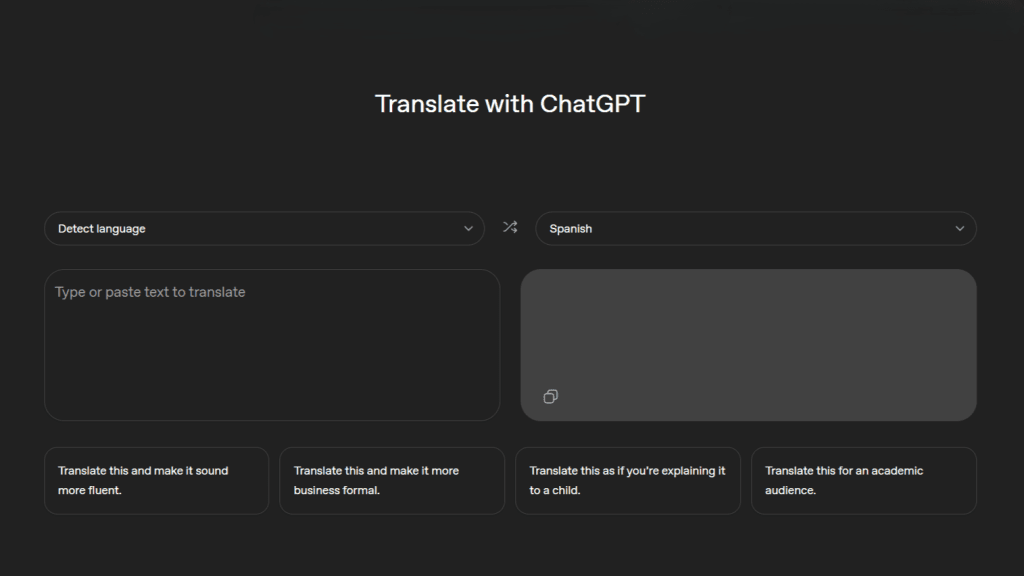
The service supports over 50 languages with automatic language detection, though only 25 to 28 languages are currently selectable through the interface. Available at chatgpt.com/translate, the free tool requires no ChatGPT subscription and features a familiar dual-pane layout similar to Google Translate and DeepL.

ChatGPT Translate distinguishes itself through contextual understanding and tone adjustment capabilities. Beyond word-for-word conversion, the tool accounts for idioms, cultural context, and user-specified styles. One-tap prompts allow users to rewrite translations as more fluent, business formal, child-friendly, or academic. The system emphasizes how translated text should sound rather than literal accuracy alone.

chaTGPT Translate interface

Initial testing suggests faster translation speeds compared to requests through the general ChatGPT interface, with short passages completing in under five seconds. OpenAI has not confirmed which model powers the service or whether specialized infrastructure supports the performance difference.

Several advertised features remain unavailable. Image-based translation and voice input are mentioned but do not function consistently on desktop browsers. The tool lacks enterprise features including document uploads, website translation, offline mode, and multi-user controls present in competing platforms. No dedicated iOS or Android apps exist.

Industry analysts note the launch positions translation as a high-frequency mainstream use case rather than secondary chatbot feature, reflecting growing demand for LLM-based translation. Slator reports the tool poses no immediate threat to established Language Technology Platforms, with near-term impact more likely on visibility and consumer expectations for conversational refinement.

The multi-billion dollar translation market remains dominated by Google Translate, which supports 249 languages and added 110 new languages in 2024. Multiple companies demonstrated real-time translation devices at CES 2026 earlier this month.

OpenAI’s quiet rollout follows its pattern of introducing tools for testing before broader promotion. The company folded SearchGPT into ChatGPT after initial prototype testing in 2024.