
SAN FRANCISCO: OpenAI quietly launched ChatGPT Translate, introducing a standalone web-based translation tool that directly challenges Google Translate‘s market dominance without formal announcement.
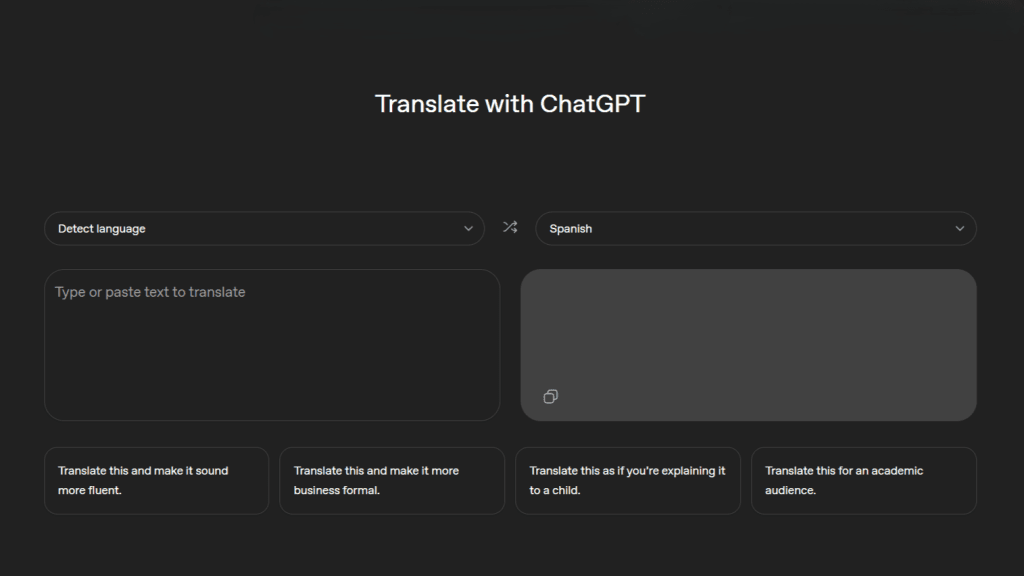
The service supports over 50 languages with automatic language detection, though only 25 to 28 languages are currently selectable through the interface. Available at chatgpt.com/translate, the free tool requires no ChatGPT subscription and features a familiar dual-pane layout similar to Google Translate and DeepL.
ChatGPT Translate distinguishes itself through contextual understanding and tone adjustment capabilities, powered by advancements seen in OpenAI’s latest AI model. Beyond word-for-word conversion, the tool accounts for idioms, cultural context, and user-specified styles. One-tap prompts allow users to rewrite translations as more fluent, business formal, child-friendly, or academic. The system emphasizes how translated text should sound rather than literal accuracy alone.
Initial testing suggests faster translation speeds compared to requests through the general ChatGPT interface, with short passages completing in under five seconds. OpenAI has not confirmed which model powers the service or whether specialized infrastructure supports the performance difference.
Several advertised features remain unavailable. Image-based translation and voice input are mentioned but do not function consistently on desktop browsers. The tool lacks enterprise features including document uploads, website translation, offline mode, and multi-user controls present in competing platforms. No dedicated iOS or Android apps exist.
Industry analysts note the launch positions translation as a high-frequency mainstream use case rather than secondary chatbot feature, reflecting growing demand for LLM-based translation. Slator reports the tool poses no immediate threat to established Language Technology Platforms, with near-term impact more likely on visibility and consumer expectations for conversational refinement.
The multi-billion dollar translation market remains dominated by Google Translate, which supports 249 languages and added 110 new languages in 2024. Multiple companies demonstrated real-time translation devices at CES 2026 earlier this month.
OpenAI’s quiet rollout follows its pattern of introducing tools for testing before broader promotion. The company folded SearchGPT into ChatGPT after initial prototype testing in 2024.

 Previous


