
SEATTLE: Autonomous ground systems startup Overland AI has raised $100 million in fresh funding as demand grows for its military-grade autonomous vehicles across the US Armed Forces.
The equity round was led by 8VC, with continued backing from Point72 Ventures, Ascend Venture Capital, Shasta Ventures and Overmatch Ventures. New investors include Valor Equity Partners and StepStone Group, while the total raise also features a $20 million venture debt facility from TriplePoint Capital. The funding comes just a year after Overland AI raised $42 million, taking its total capital raised to over $140 million.
Founded in 2022 after spinning out of the University of Washington, Overland AI has grown to more than 100 employees. The company works closely with the U.S. Army, Marine Corps and SOCOM, and recently secured a $2 million contract with the U.S. Army.
Also read: Defense AI Startup Shield AI Raises $2B at $12.7B Valuation
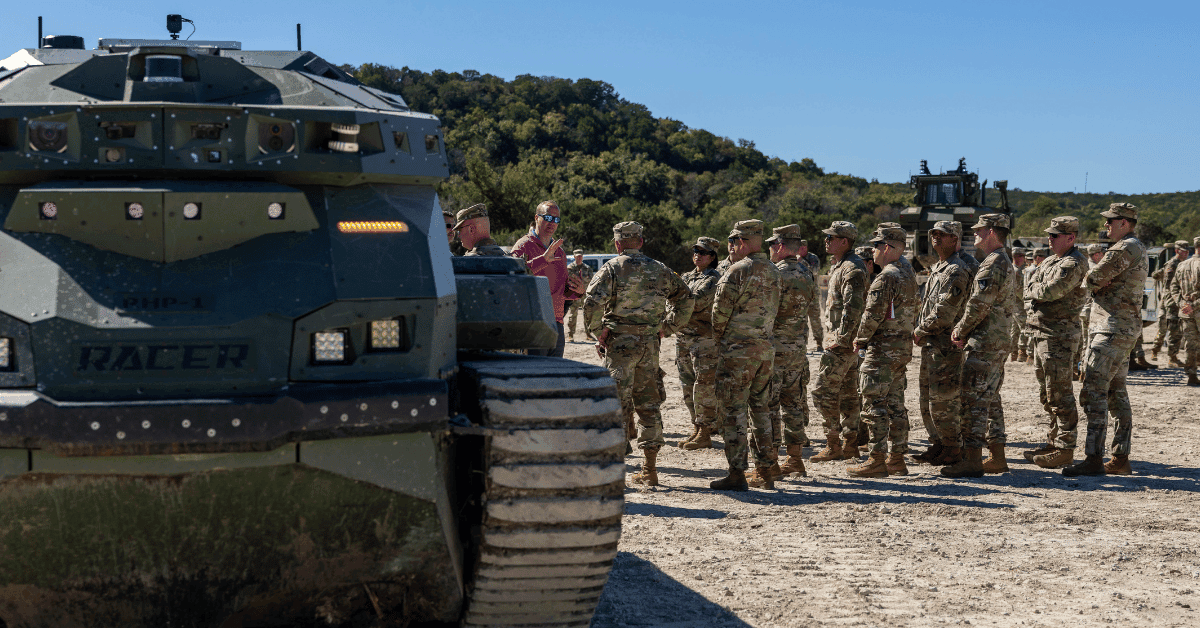
Overland AI develops autonomous ground technology that allows a single human operator to control multiple robotic vehicles in complex, off-road and GPS-denied environments. Its systems can be installed on different vehicles and are designed to operate at tactically relevant speeds, including in high-risk combat scenarios such as breaching missions.
Also read: Anduril Raises $5B Series H to Scale Defense AI Manufacturing
The company’s flagship autonomous tactical vehicle, ULTRA, debuted last year and is already being used for autonomous resupply missions following airborne insertions, including deployments with the 82nd Airborne Division.
“Demand for ground autonomy has moved decisively from experimentation to operational integration,” said Stephanie Bonk, co-founder and president of Overland AI. He added, “This funding allows us to scale alongside the units adopting our technology.”
Overland AI completed DARPA’s RACER program last year and has also expanded beyond defense. Recently, it partnered with CAL FIRE to test its autonomous vehicles for wildfire logistics and resupply operations in Southern California.
The startup plans to use the new capital to expand manufacturing, field support and operational integration teams to meet rising military demand.

 Previous


