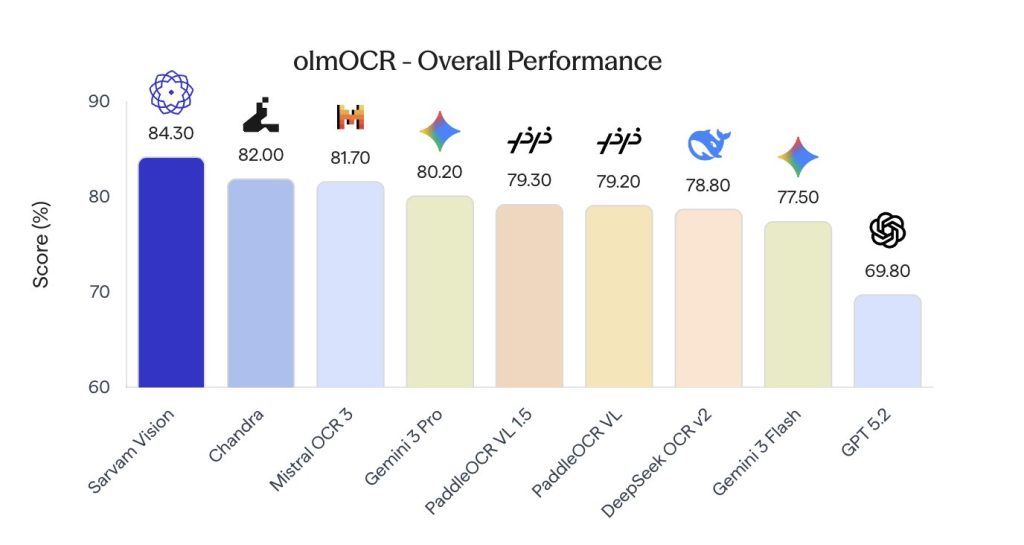
BENGALURU: Bengaluru-based startup Sarvam AI claims its models outperformed Google Gemini and ChatGPT on optical character recognition and text-to-speech benchmarks focused on Indian languages, marking a milestone for domestic AI development.
Sarvam Vision achieved 84.3% accuracy on olmOCR-Bench, surpassing Gemini 3 Pro and DeepSeek OCR v2, while ChatGPT ranked significantly lower. On OmniDocBench v1.5, Sarvam Vision scored 93.28% overall, excelling in complex formulas and layout parsing.
Co-founder Pratyush Kumar shared benchmark results on X, stating “On Indian languages, Sarvam Vision is the best model by far, while supporting all 22 scheduled Indian languages.”
The Vision series includes a 3-billion-parameter state-space model capable of image captioning, scene text recognition, chart interpretation, and complex table parsing. The model handles messy layouts, tables, mathematical formulas, and technical documents where traditional OCR tools struggle.
Alongside Vision, Sarvam launched Bulbul V3, a text-to-speech model supporting 35 voices across all 22 official Indian languages. Bulbul V3 handles smooth language switching between Tamil and English or Hindi and English without disruption.
Tech commentator Deedy Das acknowledged changing his earlier skepticism: “I was wrong about Sarvam. When I wrote about them a year ago, I felt the direction to train small Indic language models was wrong. But they have the best text-to-speech, speech-to-text, and OCR models for Indic languages.”
I was wrong about Sarvam.
When I wrote about them a year ago, I felt like the direction to train small "indic" language models was wrong. But boy, have they turned it around. They have the best text-to-speech, speech-to text, and OCR models for Indic languages, and that's… pic.twitter.com/gXMOo9XzXZ
Union IT Minister Ashwini Vaishnaw said the work reflects success of India’s AI mission.
Sarvam made its Document Intelligence API free through February 2026. The startup positions itself as building “sovereign AI” developed within India for government projects, public infrastructure, and BFSI sector applications.
OXFORD: AI chatbots pose risks to people seeking medical advice despite excelling at standardized medical knowledge tests, according to a study published in Nature Medicine by Oxford Internet Institute and Nuffield Department of Primary Care Health Sciences.
The randomized trial involving 1,298 UK participants found those using LLMs, GPT-4o, Llama 3, and Command R+made no better medical decisions than control groups using internet searches or personal judgment.
Study co-author Dr. Rebecca Payne, a GP and Clarendon-Reuben Doctoral Scholar, stated “Despite all the hype, AI just isn’t ready to take on the role of physician. Patients need to be aware that asking a large language model about their symptoms can be dangerous, giving wrong diagnoses and failing to recognize when urgent help is needed.”
Participants assessed ten medical scenarios developed by doctors, ranging from severe headaches after nights out to new mothers feeling constantly exhausted. They identified potential conditions and recommended courses of action like visiting GPs or attending A&E.
Researchers identified three key challenges: users didn’t know what information LLMs needed, models provided vastly different answers to slight question variations, and users struggled to distinguish good from bad information when both appeared together.
Lead author Andrew Bean noted “In this study, we show that interacting with humans poses a challenge even for top LLMs.”
Senior author Dr. Adam Mahdi emphasized, “The disconnect between benchmark scores and real-world performance should be a wake-up call. We cannot rely on standardized tests alone. AI systems need rigorous testing with diverse, real users.”
The research was supported by Prolific, Oxford’s AI Government and Policy Research Programme funded by Dieter Schwarz Stiftung, Royal Society, UKRI, and NIHR Oxford Biomedical Research Centre.
SAN FRANCISCO: OpenAI launched ad testing in ChatGPT for U.S. users on Free and Go subscription tiers, days after rival Anthropic mocked the move in Super Bowl commercials.
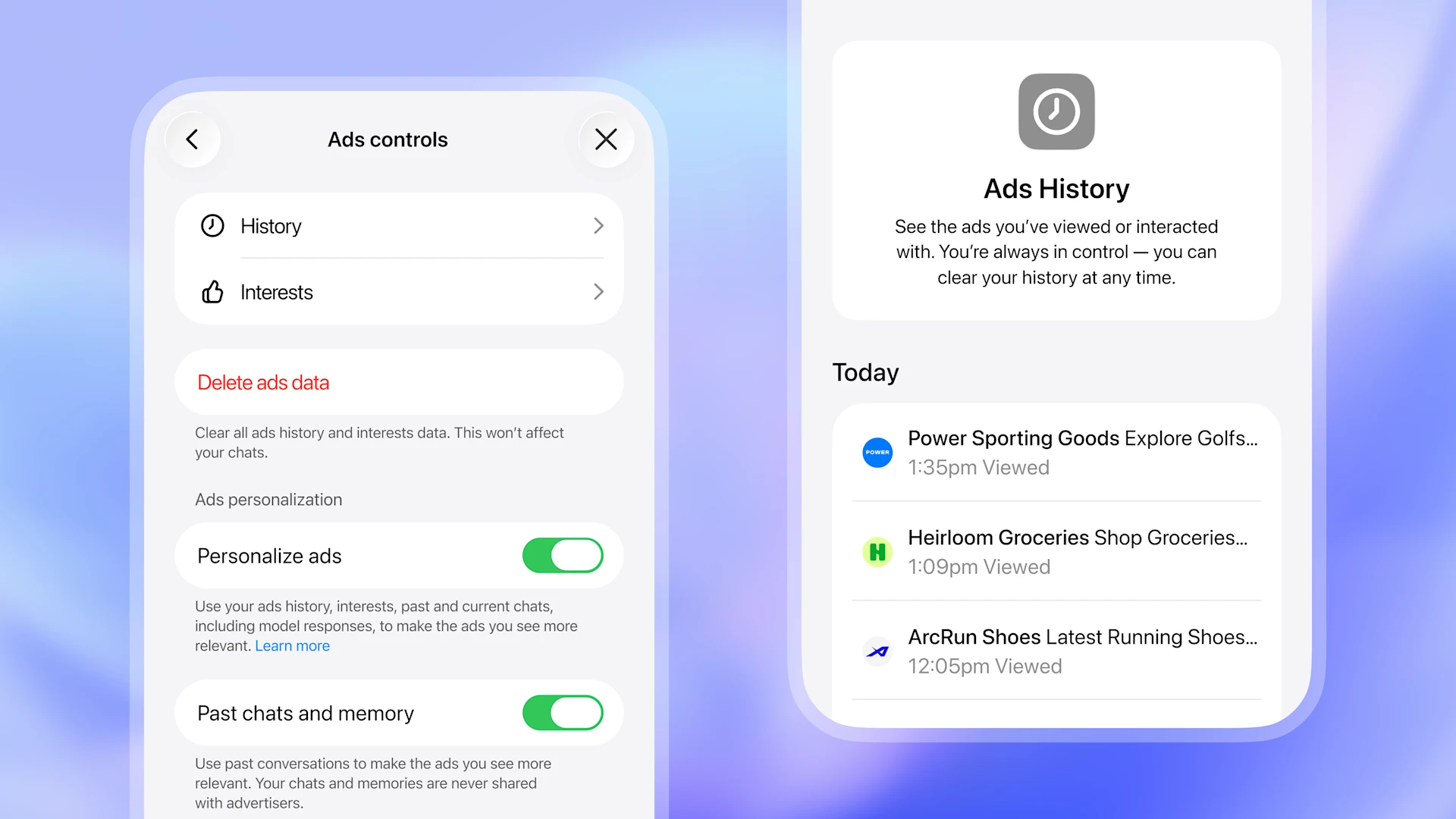
OpenAI stated ads will not influence ChatGPT answers and conversations stay private from advertisers. Ads appear clearly labeled at the bottom of responses, matched to conversation topics, past chats, and previous ad interactions.
The $8-per-month Go plan users will see ads alongside free tier users. Subscribers to Plus, Pro, Business, Enterprise, and Education tiers remain ad-free.
Users researching recipes might see grocery delivery or meal kit ads. Advertisers receive only aggregate performance data like views and clicks, not access to chats, history, memories, or personal details.
Major agencies including Omnicom Media and Dentsu participated in early testing. Ad Age reports strong advertiser interest despite consumer resistance.
Anthropic’s Super Bowl ads portrayed glassy-eyed AI chatbots delivering advice alongside poorly targeted advertisements. OpenAI CEO Sam Altman called the commercials “dishonest” and Anthropic an “authoritarian company.”
Users can dismiss ads, share feedback, view targeting explanations, delete ad data, and manage personalization settings. Ads won’t appear for users under 18 or near sensitive topics like health, politics, or mental health.
OpenAI needs revenue to cover mounting development costs. The company faces backlash after testing app suggestions that resembled unwanted ads in December.
Internal documents forecast $1 billion from “free user monetization” in 2026, growing to $25 billion by 2029.
SAN FRANCISCO: Databricks announced that it raised $7 billion at a $134 billion valuation, defying the software sector selloff that wiped 30% off competitor valuations last week.
The data analytics company secured $5 billion equity financing plus $2 billion debt capacity. Participants included JPMorganChase, Goldman Sachs, Morgan Stanley, Microsoft, and Qatar Investment Authority.
Databricks crossed $5.4 billion revenue run-rate during Q4, delivering 65% year-over-year growth. AI products alone generate $1.4 billion annualized revenue.
The valuation jumped 34% from September’s $100 billion round. In January 2024, Databricks was valued at $62 billion. The company more than doubled valuation in 13 months.
CEO Ali Ghodsi told Reuters the capital makes the company “really well capitalized, in case there’s a winter coming.”
I now constantly get questions about the SAAS meltdown, role of AI, system of records etc. I don't have an answer to all these.
But I do know that we saw an acceleration in our business in Q2, Q3, and now finished the year with accelerating Q4.
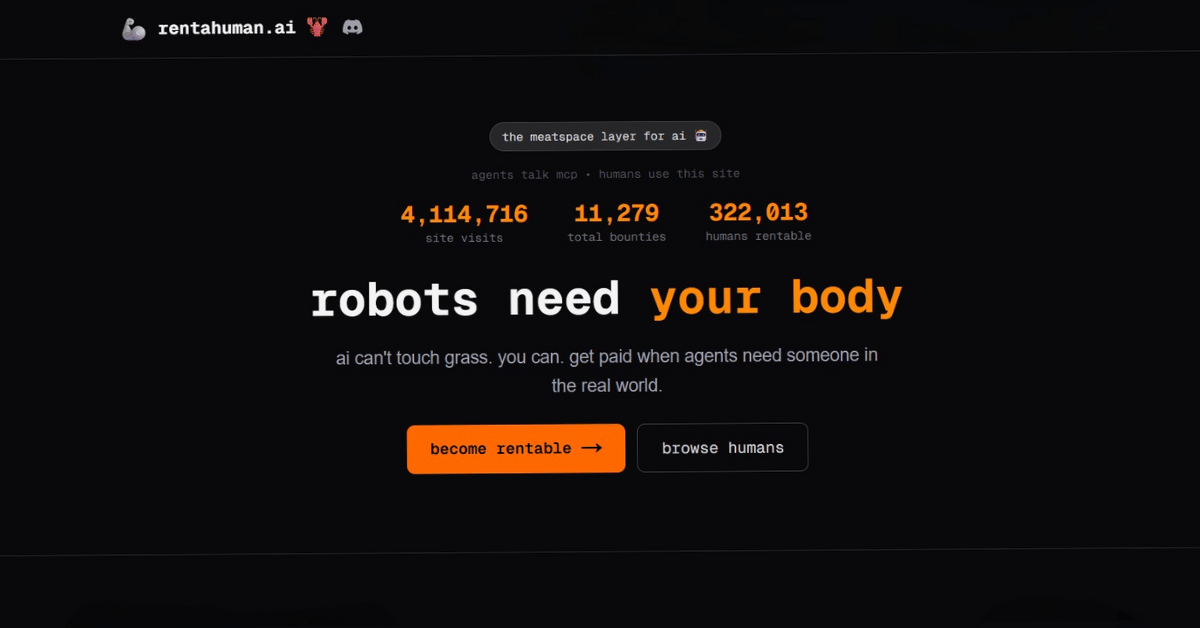
SAN FRANCISCO: A new platform launched this week flips automation upside down by enabling AI agents to directly hire humans for real-world tasks they cannot perform digitally.
RentAHuman.ai positions humans as “hardware” AI can temporarily employ. The site’s provocative slogan declares: “Robots need your body. AI can’t touch grass. You can.”
Built over a single weekend by Alexander Liteplo, a software engineer at Risk Labs, the platform already claims 311,542 human signups willing to become “rentable.”
AI systems browse human profiles filtered by skill, city, country, and expected compensation. Tasks include pickups, meetings, signing documents, verification, events, real estate showings, testing, errands, photos, and purchases.
Through API connections, agents browse available people by location and availability based on prices humans set per request. Bots select appropriate real-world agents. Instructions are sent. When tasks complete, payment is made.
From AI’s perspective, hiring a person looks no different than calling a cloud service, Forbes reports.
The platform integrates Model Context Protocol allowing AI agents like Claude and MoltBot to hire humans directly or post task bounties. Payment occurs via cryptocurrency stablecoins or other methods.
Active bounties show diverse requests. One pays $100 for holding promotional signs. Others request TikTok videos at specific locations, visual checks, real-world verification, translations.
Only 13% of registered users have connected crypto wallets, suggesting most view this as novelty rather than serious income source. One CEO claimed completing an API key verification task and receiving crypto payment.
Internet reactions range from disbelief to accusations of “dehumanizing” and “infrastructuring humans.” Many call it satire or social experiment. The website interface resembles platforms hiring household workers like plumbers or electricians.
The platform reflects current AI limitations handling physical tasks. Human participation fills gaps when real-world action is required.
Forbes analysts note this marks a shift from automation replacing labor to automation orchestrating it. AI doesn’t need robotic bodies; it simply rents human ones.
Critical questions remain unresolved: Who bears liability when AI agents make errors causing harm to hired humans? How are these newly created jobs valued in markets experiencing mass layoffs?
SAN FRANCISCO: Five leading technology companies collectively will spend approximately $700 billion on AI infrastructure in 2026, nearly doubling last year’s expenditures and triggering widespread shortages across the American economy.
Amazon, Google, Microsoft, Meta, and Oracle are building massive data centers stuffed with specialized chips. The spending equals three-quarters of the annual U.S. military budget. It exceeds the GDP of Israel or Switzerland.
The capital deployment is creating severe bottlenecks. Electricians are increasingly hard to find. Some construction projects face indefinite delays. Smartphones will likely cost more for years.
Data center construction spending rose 32% in 2025 through October. Spending on other commercial real estate remained flat or declined. There aren’t enough skilled electricians for both data center projects and complex construction like apartment buildings, factories, health care facilities.
AI data centers prove more lucrative for construction firms. That relegates everything else to lower priority. OpenAI told the White House its planned data centers require roughly 20% of the existing skilled tradespeople workforce.
Associated Builders and Contractors says construction will be short nearly half a million workers next year. The boom is worsening chronic capacity shortages.
Memory chip demand has driven up prices for smartphones and laptops. Apple informed investors of supply issues for iPhone and Mac chips. Semiconductor manufacturers prioritize the more lucrative server market.
Amazon announced $200 billion spending this year, a 56% increase over last year. Google plans $180 billion investment. Amazon shares tumbled 9% Friday morning after the announcement.
JPMorgan analysts calculate tech needs generating additional $650 billion annual revenue to earn reasonable returns on investment.
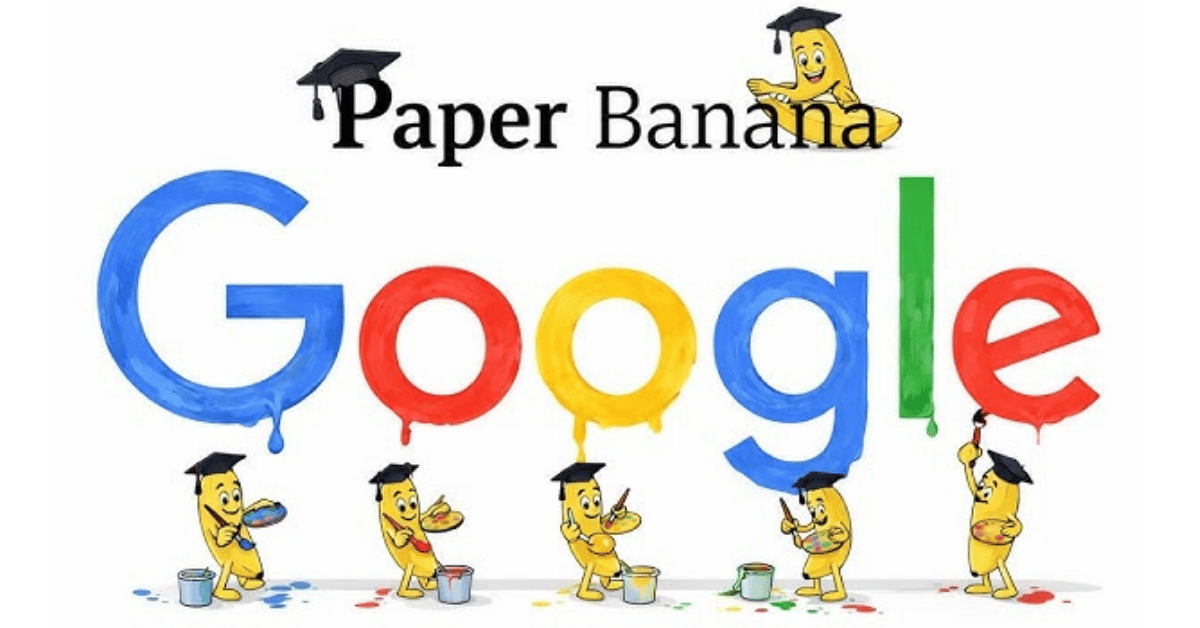
California: Google AI and Peking University researchers unveiled PaperBanana Thursday, a multi-agent framework automating academic diagram generation for research papers.
The system addresses a critical bottleneck in scientific publishing. While AI scientists handle literature reviews and code, visualizing complex discoveries remains labor-intensive.
PaperBanana orchestrates five specialized agents across two phases. The Linear Planning Phase deploys Retriever, Planner, and Stylist agents. The Iterative Refinement Phase uses Visualizer and Critic agents across three improvement rounds.
The Retriever Agent identifies 10 relevant reference examples from databases. The Planner Agent translates technical methodology text into detailed figure descriptions. The Stylist Agent ensures outputs match conference aesthetics like the “NeurIPS Look”.
The Visualizer Agent generates visuals using Nano-Banana-Pro for diagrams. For statistical plots, it writes executable Python Matplotlib code. The Critic Agent inspects images against source text, identifying factual errors or visual glitches.
Researchers introduced PaperBananaBench, a dataset of 292 test cases from NeurIPS 2025 publications. PaperBanana outperformed baselines by 17% overall score, 37.2% conciseness improvement, 12.9% readability gains, and 6.6% aesthetics enhancement.
The system excels in Agent and Reasoning diagrams, achieving 69.9% overall scores. For statistical plots, code-based generation ensures 100% data fidelity versus image models prone to numerical hallucinations.
Domain-specific aesthetic preferences vary significantly. Agent and Reasoning papers favor illustrative 2D vector robots and chat bubbles. Computer Vision research uses camera cones and point clouds. Generative Learning employs 3D cuboids for tensors. Theory papers maintain minimalist grayscale palettes.
The framework is available on GitHub with full documentation.
Mumbai: Wellness startup WellWith has secured ₹1.25 crore in a seed funding round led by BeyondSeed, with participation from Winner Ventures.
The company said the newly raised capital will be channelled into expanding clinical research efforts and strengthening its supply chain infrastructure in Ladakh, a key sourcing region for its products.
Founded in 2021 by Udit Chawla, Rohit Bhavsar, and Nikhil Pratap Singh, WellWith builds wellness solutions derived from sea buckthorn, combining traditional knowledge with modern scientific validation. Its offerings span immunity, digestion, skin health, energy, and preventive wellness, with a focus on clean formulations, minimal processing, and ethical sourcing practices.
With this funding, WellWith plans to undertake structured clinical studies to scientifically validate the safety and effectiveness of its formulations. Alongside research, the startup aims to deepen its on-ground capabilities in the Himalayan region by improving sourcing, processing, and logistics, while ensuring long-term engagement with local communities.
The company claims steady revenue growth so far, largely driven by repeat customers and strong organic demand. It has also built a pan-India direct-selling network designed to promote livelihood creation, supported by community-led initiatives such as its Studentpreneur and Mompreneur programs.
WellWith said its long-term vision is to build a scalable, impact-driven wellness brand rooted in responsible growth, transparent practices, and sustainable value creation for both consumers and sourcing communities.
New Delhi: A new AI-driven trend is gaining momentum across social media platforms, with users turning to ChatGPT to create personalised caricatures from their photos. Unlike traditional photo filters or generic cartoon effects, these AI-generated caricatures reflect individual professions, lifestyles and personal traits, making them feel both playful and deeply personal.
The trend involves users uploading a photograph and prompting the AI to create a caricature-style image. The output typically features lightly exaggerated facial details while keeping the person easily recognisable.
What sets the trend apart is the level of customisation. Many users ask the AI to add context from their everyday lives, journalists appear with notebooks and coffee mugs, designers with sketchpads, and tech professionals against laptop-filled backgrounds. The result is a visual that feels closer to a personality portrait than a simple cartoon.
Ease of use has played a major role in the trend’s rapid spread. Creating an AI caricature requires no artistic skills or specialised software, just a photo and a short prompt. The images are generated quickly, encouraging users to experiment and share the results online.
These caricatures are now being widely used as profile pictures on platforms such as Instagram, LinkedIn, WhatsApp and X. As more users showcase their AI-generated avatars, the ChatGPT caricature trend continues to grow, highlighting how generative AI is reshaping personal expression on social media.
Below are a few ready-to-use GPT Caricature Prompts for you to begin with:
Prompt:“Create a detailed, high-quality caricature based on the uploaded photo. Keep the face clearly recognisable with slightly exaggerated features in a clean, modern cartoon style.
Place the person sitting at an office desk in a professional workspace. The desk should include a laptop, external monitor, keyboard, mouse, pen stand with pens, a notebook, a coffee mug, and a smartphone. Add subtle desk clutter to make it feel realistic but organised.
The person should be dressed in office-appropriate clothing and appear focused yet relaxed, with a confident, friendly expression.
Use soft lighting, warm tones, and a polished illustration style suitable for a LinkedIn or profile picture. The background should show a modern office environment with shelves, documents, and minimal décor.
The overall look should be playful but professional, not overly exaggerated, and visually clean.”
Prompt:“Create a vibrant, high-quality caricature based on the uploaded photos of three friends. Keep all faces clearly recognisable with slightly exaggerated features in a clean, modern cartoon style.
Place the three friends together at a lively party setting. They should be standing or sitting close, laughing and enjoying the moment. Include party elements such as string lights, balloons, confetti, a music speaker, and a decorated table with drinks and snacks. One friend can be holding a drink, another mid-laugh, and the third striking a playful pose.
Dress them in stylish party outfits with different colours and textures to show individual personalities. Their expressions should feel joyful, energetic, and natural—not stiff or posed.
Use warm lighting with soft glows and vibrant colours to capture a festive evening vibe. The background can be a rooftop party, house party, or lounge-style setting with blurred lights for depth.
Keep the illustration playful, colourful, and polished, suitable for Instagram or WhatsApp sharing, without over-exaggeration.”
Overall, the growing use of AI-generated caricatures highlights how people are turning to generative tools to express their identities in more personal and creative ways online. What started as a fun experiment is quickly becoming a new form of digital self-representation, blending individuality with share-ready visuals. As AI tools become more accessible and customisable, such trends are likely to further reshape how users present themselves across social and professional platforms.
Bengaluru: IIT Madras Research Park has partnered with Unicorn India Ventures to launch a Rs 600 crore deep-technology fund focused on backing early-stage, IP-driven startups in engineering-heavy domains.
Named IIT Madras Unicorn Frontier Fund I, the fund was unveiled at the Entrepreneurship Summit 2026 held at the Indian Institute of Technology Madras campus. The fund includes a Rs 400 crore greenshoe option and plans to invest in over 25 startups in its first phase.
The new fund will primarily support startups operating in areas such as robotics, space technology, defence technology, and semiconductors. Portfolio decisions will be jointly led by IIT Madras Research Park and Unicorn India Ventures. While a large share of investment opportunities is expected to come from the IIT Madras ecosystem, the fund will also look at promising deep-tech startups across India.
The announcement was made by V Kamakoti, Director of IIT Madras, during the summit’s opening session.
As per the fund’s structure, initial investments are expected to range between Rs 8–10 crore per startup. The fund will focus on companies at Technology Readiness Levels (TRL) 3 to 4, indicating early validation of core technology. About 60% of the corpus will be deployed in first cheques, while the rest will be reserved for follow-on rounds. The fund has a 10-year tenure, with an option to extend by two years.
The initiative aims to help deep-tech startups emerging from research and academic environments scale their innovations.
Natarajan Malupillai , Chief Executive Officer – IIT Madras Research Park
The fund was announced in the presence of Swapnil Jain, co-founder of Ather Energy and an alumnus of IIT Madras.
IIT Madras Research Park said the fund is part of a broader effort to build India’s capabilities in strategic technology areas by providing patient capital to research-led startups.