WINN.AI Raises $18mn Series A to Guide Sales Reps Live on Calls

TEL AVIV: WINN.AI raised $18 million in a Series A round Wednesday to expand its real-time AI sales assistant that coaches sales representatives during live customer calls, bringing total funding to $35 million since its 2022 founding.

Insight Partners, Mangusta Capital, and S Capital co-led the round with participation from Moneta, HighSage, Alumni Ventures, Sarona Ventures, and OurCrowd.

The Tel Aviv-based startup positions itself against traditional sales analytics tools focused on post-call analysis.

Traditional Sales AI is passive, recording calls to tell you why you lost. WINN.AI is active. We don’t analyze the past; we shape the present.

Eldad Postan-Koren – CEO – WINN.AI

The platform listens during live calls, identifies objections and technical questions in real time, and surfaces answers from the company’s knowledge base while automatically capturing CRM data without manual entry.

Enterprise customers report measurable results. HR-tech company Deel saw win rates jump 33% after five months. Data security startup Cyera doubled its CRM fill rate and increased playbook adoption by 20%. IT management firm Kaseya synchronized 1,200 sales reps and reduced administrative time by 98%.

WINN.AI tripled annual recurring revenue in 2025, grew 30-fold over two years, and maintains a 0% churn rate among enterprise clients including Intercom, WalkMe, and Snyk.

The company employs 40 people across Israel and the United States. New capital will accelerate U.S. market expansion and grow the Israel development center. WINN.AI is also expanding beyond account executives into sales development, account management, solutions engineering, customer success, and HR teams.

AI-related sales and marketing startups raised nearly $4 billion in venture capital in 2025, up from $3.4 billion in 2024.

Cisco Takes On Nvidia and Broadcom With New AI Chip

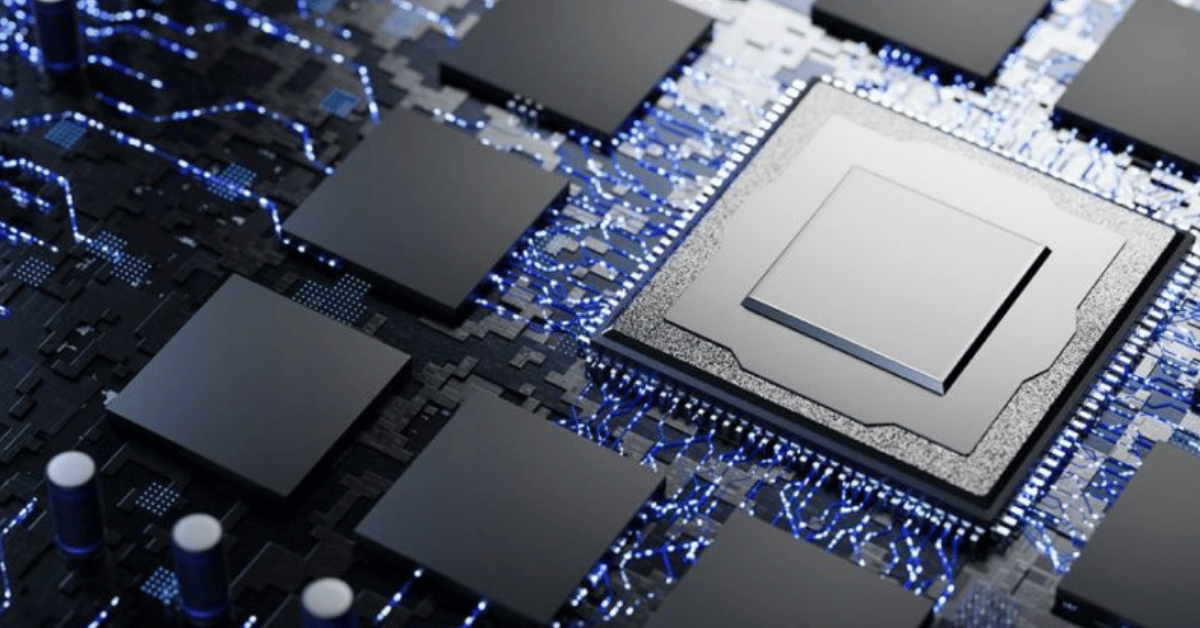
SAN FRANCISCO: Cisco Systems enters the AI chip wars with the Silicon One G300, a 102.4 terabits-per-second switching processor built to handle the data-movement demands of massive AI clusters. Unveiled this week at Cisco Live EMEA in Amsterdam, the chip takes direct aim at Nvidia and Broadcom as competition for the $600 billion AI infrastructure market intensifies.

Manufactured on TSMC’s 3-nanometer process, the G300 introduces what Cisco calls Intelligent Collective Networking, a combination of shared packet buffering, path-based load balancing, and real-time telemetry designed to prevent the traffic jams that stall AI training runs. The company says the chip completes AI computing jobs 28% faster by automatically rerouting data around congested links within microseconds, and improves overall network utilization by 33%.

The G300 powers two new switching platforms, the Nexus N9000 and Cisco 8000, both available in fully liquid-cooled configurations that Cisco claims improve energy efficiency by nearly 70%. The chip also supports up to 512 ports and 1.6 terabit Ethernet connections, giving hyperscalers and enterprise operators room to grow without replacing hardware as workloads evolve.

Cisco plans to put the G300 on sale in the second half of 2026. The move signals a strategic pivot toward the AI networking layer just as Nvidia embeds its own networking silicon deeper into its rack-scale systems and Broadcom expands its Tomahawk series. For enterprises and cloud providers building out AI infrastructure, a credible third competitor in switching silicon could reshape both pricing and procurement strategies.

AI Agents Force SaaS Industry to Rethink the Per-Seat Pricing Model

SAN FRANCISCO: For two decades, the software industry runs on a simple equation: more employees equals more revenue. Every new hire means another seat license, another monthly subscription, another line on the invoice. In early 2026, that equation breaks.

The arrival of agentic AI systems capable of logging into enterprise tools, executing multi-step workflows, and delivering finished outputs without human input removes the human user from the software loop entirely.

Anthropic’s Claude Cowork, which handles tasks across CRM platforms, legal databases, analytics dashboards, and support systems autonomously, crystallizes what many CIOs had quietly been calculating: a single AI agent can replace the workload of dozens of licensed users.

The implications for how software gets priced and sold are fundamental. Enterprises no longer ask “how many employees will use this?” They ask “how many tasks can this complete?” That shift renders per-seat pricing not just inefficient but structurally obsolete.

PitchBook analysts describe the emerging model as “Service as Software” vendors selling outcomes and automated workflows rather than access and interfaces. An annual charge of $1,200 per seat becomes a charge of $10,000 per automated workflow, with software spend competing directly with payroll budgets rather than IT line items.

Incumbent players face a hard pivot. Salesforce, ServiceNow, and Workday are racing to embed agentic capabilities into their platforms before AI-native competitors render their interfaces irrelevant. Forrester advises enterprises to consolidate vendor relationships, eliminate commodity SaaS tools, and demand clear AI roadmaps from strategic partners.

Vertical SaaS providers serving healthcare, manufacturing, and other data-intensive industries hold a stronger defensive position, their proprietary data and deep workflow integrations are harder to replicate than generic productivity tools.

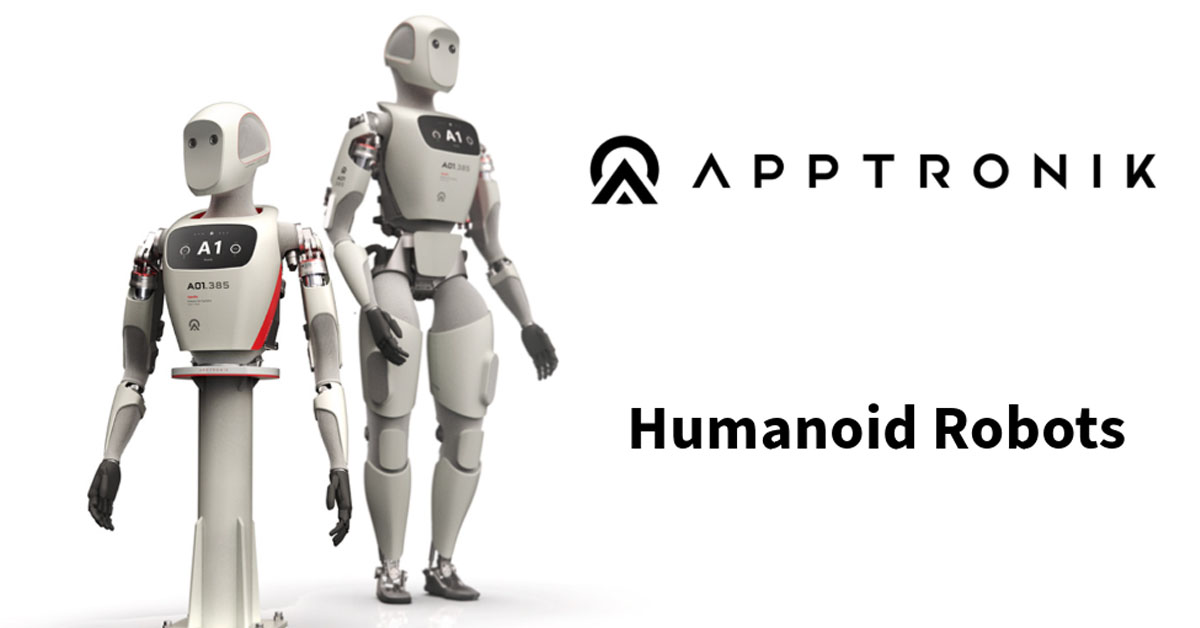
Apptronik powers ahead in humanoid race with $520M funding

AUSTIN: Humanoid robotics startup Apptronik raised $520 million on Wednesday in a Series A extension round at a $5 billion valuation, triple its initial Series A price, as the Austin-based company races Tesla’s Optimus and Chinese rivals to factory-floor deployment.

The round was co-led by B Capital and Google, with returning investors Mercedes-Benz and PEAK6 alongside new backers AT&T Ventures, John Deere, and Qatar Investment Authority. Total Series A funding now exceeds $935 million, bringing Apptronik’s all-time capital raised to nearly $1 billion.

CEO Jeff Cardenas said the company will use fresh capital to scale production of its Apollo humanoid robot, expand its Austin footprint, open a California office, and build robot training and data collection facilities. A new Apollo model is set to debut later in 2026. The company plans to hire at least 200 additional workers over the next year, adding to its current 300-person headcount.

Apollo robots are already deployed in live environments with Mercedes-Benz and GXO Logistics, performing warehouse and manufacturing tasks including trailer unloading, inventory sorting, and machine tending. Apptronik’s strategic partnership with Google DeepMind powers Apollo using Gemini Robotics AI models.

Cardenas frames humanoid versatility as the core commercial pitch: “one robot to do thousands of tasks, versus a thousand robots doing a single task.” B Capital Chair Howard Morgan forecasts $1 billion in Apollo demand within a few years.

The raise comes as VC funding for humanoid robotics surged 300% year-over-year. Key competitors include Tesla Optimus, which Elon Musk acknowledged remains in early R&D despite $20 billion in planned 2026 capex, along with China’s Unitree, Figure AI, Agility Robotics, and 1X.

Mass production and order fulfillment is expected to begin in 2027.

Lema AI Raises $24M to Fix Enterprise Supply Chain Security

NEW YORK: Lema AI emerges from stealth with $24 million in Series A funding to replace static vendor compliance checklists with continuous, AI-driven supply chain risk monitoring. Team8 leads the round, with Salesforce Ventures participating and F2 Venture Capital having backed the company at seed.

Founded in 2023 by Eddie Dovzhik, Omer Yehudai, and Tomer Roizman, all veterans of Israeli intelligence Unit 8200, the New York and Israel-based startup argues that the compliance questionnaire model enterprises still use to vet vendors is fundamentally broken.

Gartner data cited by the company finds that 60% of organizations now manage more than 1,000 third-party vendors, while McKinsey research indicates roughly one-third of recent cyber breaches trace back to those external relationships.

Rather than automating the same ineffective forms, Lema’s platform deploys an agentic AI modeled on how a vulnerability researcher operates. It continuously tracks how vendors interact with enterprise systems, monitoring data movement, access to sensitive assets, and permission changes over time.

Then maps realistic attack paths a compromised vendor could introduce. Security teams can assess a new vendor in under five minutes and receive ranked, prioritized risk findings with specific remediation steps.

Customers span financial services, healthcare, and multiple Fortune 500 companies, though Lema declines to name them. The fresh capital accelerates development of the company’s autonomous vendor risk analysis engine and expands its go-to-market team.

The 35-person company, with roughly 25 employees based in Israel, targets heavily regulated enterprises where a single third-party breach can trigger cascading operational and regulatory consequences.

Creating Disney Characters Via Google AI is No Longer Easy

New Delhi: Disney has moved to curb the unchecked creation of its characters by artificial intelligence tools, forcing Google to block image generation of Disney-owned properties across its AI platforms. The action follows a cease-and-desist notice sent in December, in which Disney accused Google of letting its AI act like an unlicensed “virtual vending machine” for copyrighted characters.

Since then, users have found that prompts which earlier produced detailed images of popular characters now fail. Google’s AI tools respond with messages saying the request cannot be completed due to “concerns from third-party content providers.”

The change signals a tightening of rules as copyright owners push back against unrestricted AI image generation.

While some users have already identified small workarounds, such as uploading reference images to influence outputs, the blocks have largely stopped direct character creation. Generating images of characters like Iron Man, Darth Vader, or Elsa through simple text prompts is no longer possible.

Disney’s legal letter argued that Google’s AI systems were reproducing copyrighted works at scale and had likely been trained on Disney-owned material without permission. The company demanded an immediate stop to unlicensed image generation, an end to training on its intellectual property, and stronger safeguards to prevent future misuse. Disney also noted that it had raised these concerns earlier without meaningful response.

Google, for its part, said it is improving copyright protection tools and compared its efforts to systems like Content ID. The company has denied training its models on proprietary data, stating that its AI relies on publicly available web content.

The dispute comes as Disney itself increases its involvement in AI, including a recent $1 billion licensing agreement with OpenAI. The episode highlights a future where AI platforms may operate under different creative limits depending on licensing deals, reshaping how users interact with generative tools.

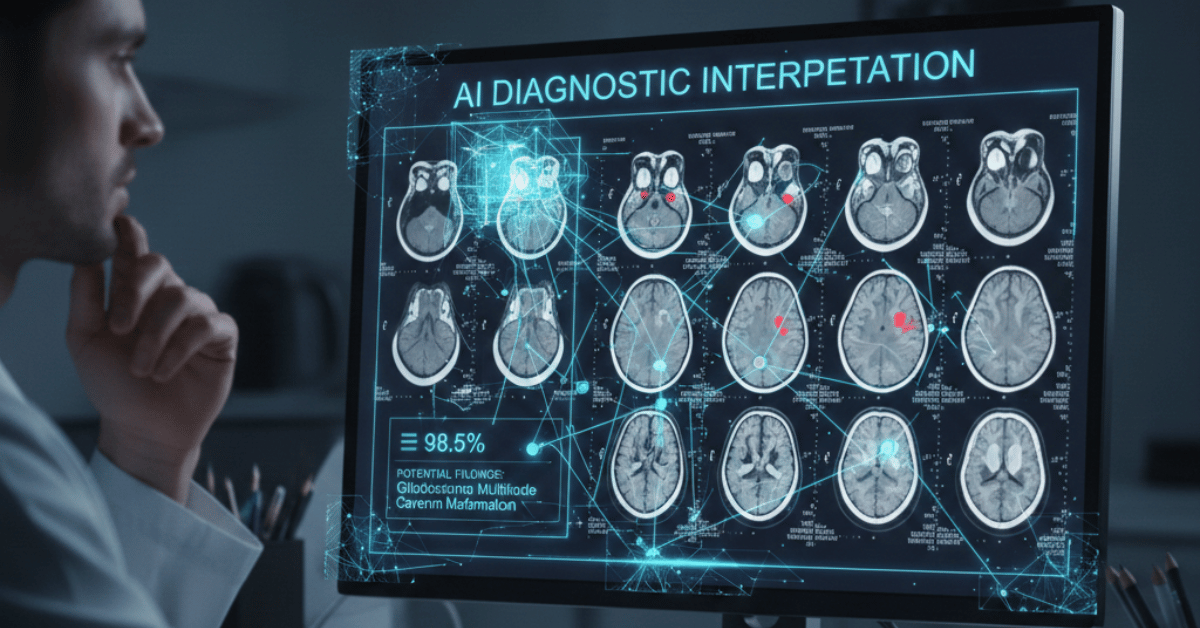
University of Michigan AI System Interprets Brain MRI Scans in Seconds

ANN ARBOR: University of Michigan researchers developed an AI system that interprets brain MRI scans in seconds, accurately identifying neurological conditions and determining which cases require urgent care, the university announced Tuesday.

The system, trained on hundreds of brain MRI datasets, can analyze complex neurological imaging at speeds impossible for human radiologists while maintaining high accuracy across multiple conditions.

Traditional brain MRI interpretation requires specialized neurologists and can take hours or days depending on workload and complexity. The AI system reduces this to mere seconds, potentially transforming emergency department workflows where rapid diagnosis determines treatment timing for stroke, traumatic brain injury, and other acute conditions.

The technology addresses critical bottlenecks in neurological care. Many hospitals face radiologist shortages, particularly overnight and in rural areas. Delays in MRI interpretation can postpone critical interventions for time-sensitive conditions like ischemic stroke, where treatment efficacy decreases dramatically with each passing hour.

The system identifies a wide range of neurological conditions including tumors, bleeding, stroke, multiple sclerosis lesions, and structural abnormalities. It also provides urgency classification, flagging cases requiring immediate attention versus routine follow-up.

University of Michigan did not disclose specific accuracy metrics or deployment timelines. The research team is reportedly working toward clinical validation trials required for FDA approval.

Similar AI diagnostic tools from companies like Viz.ai and RapidAI already assist with stroke detection, but the Michigan system’s broader neurological condition coverage represents expanded capabilities.

The development reflects accelerating AI adoption in medical imaging, where radiologist burnout and volume growth create demand for automated support systems.

Runway AI Raises $315Mn at $5.3Bn Valuation for World Models

NEW YORK: AI video generation startup Runway secured $315 million in Series E funding at a $5.3 billion valuation, nearly doubling its worth in less than 10 months, the company announced Tuesday.

General Atlantic led the round with participation from Nvidia, Adobe Ventures, AMD Ventures, Fidelity Management & Research, AllianceBernstein, Mirae Asset, Emphatic Capital, Felicis, and Premji Invest. Total funding now reaches $860 million since 2018 inception.

The fresh capital will pre-train next-generation “world models”, AI systems constructing internal environment representations to plan future events. Runway released its first world model in December and views the technology as central to tackling challenges in medicine, climate, energy, and robotics beyond current entertainment applications.

CEO Cristóbal Valenzuela described world models as “the most transformative technology of our time.” The company recently launched Gen-4.5, featuring high-definition video creation, native audio, multi-shot generation, and advanced editing capabilities.

Runway previously raised $308 million in April 2025 at $3.3 billion valuation. The latest round reflects robust investor interest in video AI startups, which raised $3.08 billion globally in 2025, up 94.6% from $1.58 billion in 2024.

The New York-based company has 140 employees and plans hiring across research, engineering, and go-to-market functions. Runway’s models serve tens of millions of users including film studios, creative teams, and global brands.

The company is expanding partnerships with CoreWeave for compute infrastructure and entering gaming, robotics, and autonomous vehicle sectors.

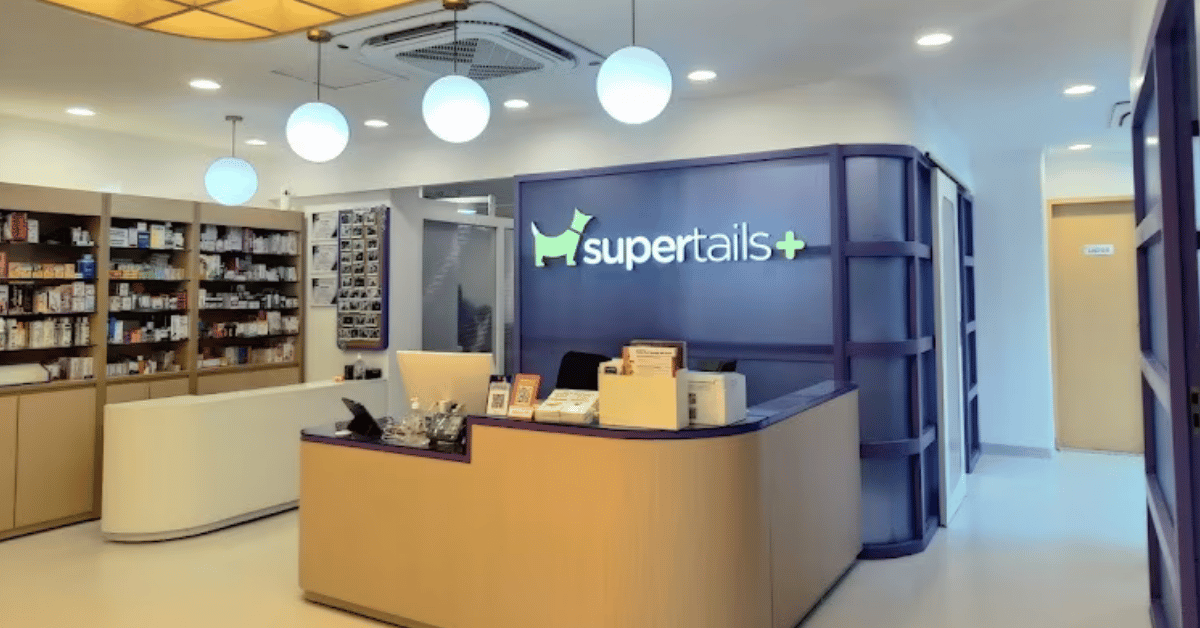
Supertails raises $30mn to scale petcare services in India

Bengaluru: Aiming to deepen its presence in the country’s fast-growing pet services market, the Indian petcare startup Supertails has secured $30 million in a fresh funding round, led by Venturi Partners.

The funding round also saw participation from Nippon India Alternative Investments and Titan Capital Winners Fund, along with continued backing from investors such as Fireside Ventures, RPSG Capital Ventures, Sauce VC, and Saama Capital.

The new capital will support Supertails’ plans to grow its physical veterinary clinics, expand doorstep healthcare services for pets, and upgrade its supply chain and delivery capabilities. 

The company is also investing in improving how its platform personalises recommendations for pet owners as it expands further across India’s large urban centres. Based on industry estimates, the round places Supertails’ valuation at roughly $130 million.

Launched in 2021 by Varun Sadana, Aman Tekriwal, and Vineet Khanna, Supertails is building an integrated ecosystem for pet parents rather than operating as a simple online store. Its app combines commerce, healthcare, and advisory services, allowing users to manage most of their pet-related needs in one place.

Alongside selling food, treats, and accessories, the startup has built a network of veterinarians offering home visits, tele-consultations, vaccinations, and preventive care. In Bengaluru, Supertails has also introduced fast delivery for thousands of pet products, including medicines, and plans to roll out similar services in other major cities.

Supertails has raised about $51 million to date. In FY25, its revenue crossed Rs 108 crore, up from around Rs 65 crore a year earlier, while losses increased as the company continued to invest aggressively in expansion.

AI Boom Triggers Global Memory Chip Shortage, DRAM Prices Surge 600%

SAN FRANCISCO: A global memory chip shortage is driving unprecedented price increases, with the Dynamic Random Access Memory (DRAM) spot prices surging over 600% in recent months as AI infrastructure diverts production capacity from consumer electronics.

Bloomberg reports memory producers including Samsung, SK Hynix, and Kioxia saw shares soar 160% since September while consumer electronics makers plunged 12%. The divide reflects capacity reallocation toward high-bandwidth memory for AI data centers.

DRAM prices jumped 171% year-over-year, with DDR5 spot prices quadrupling since September 2025. Contract prices are projected to rise 55-60% quarter-over-quarter in Q1 2026.

AI servers consume far more memory per system than consumer devices. Each gigabyte of HBM requires approximately three times the wafer capacity of standard DDR5. Data centers will consume 70% of memory produced in 2026, up from historical norms.

Samsung raised 32GB DDR5 module prices to $239 from $149 in September, a 60% increase. Macronix plans a 30% NOR flash price hike for Q1 2026.

Consumer impacts are mounting. Qualcomm shares fell 8% after warning memory constraints will limit phone production. Nintendo dropped most in 18 months on margin pressure warnings. Logitech declined 30% from November peak.

IDC forecasts 5% smartphone sales decline and 9% PC sales drop in 2026. Manufacturers face difficult choices: raise prices significantly, cut specifications, or both.

Memory represents 15-20% of mid-range smartphone bill of materials, 10-15% for flagship devices. TrendForce analysts call it “the craziest time ever” after tracking the sector for 20 years.

Normalization unlikely before late 2027 as manufacturers maintain supply discipline favoring high-margin AI products.