
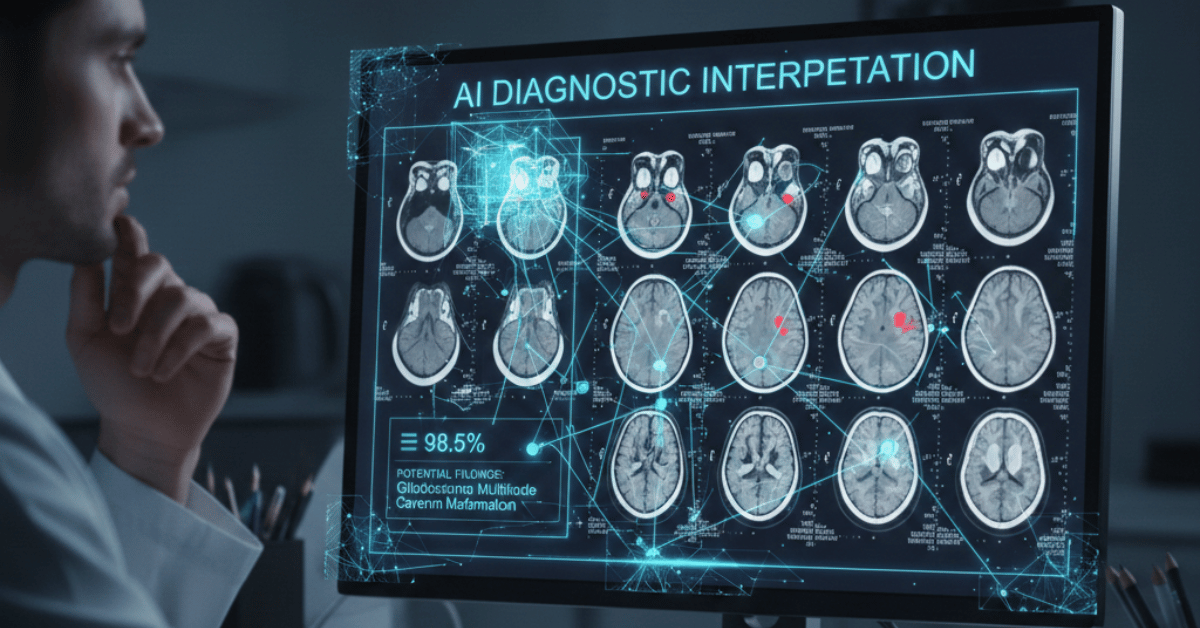
ANN ARBOR: University of Michigan researchers developed an AI system that interprets brain MRI scans in seconds, accurately identifying neurological conditions and determining which cases require urgent care, the university announced Tuesday.
The system, trained on hundreds of brain MRI datasets, can analyze complex neurological imaging at speeds impossible for human radiologists while maintaining high accuracy across multiple conditions.
Traditional brain MRI interpretation requires specialized neurologists and can take hours or days depending on workload and complexity. Which is why hospitals are increasingly adopting AI-assisted radiology systems to speed up imaging workflows.
Also read: China’s New Brain Chip Leaves Nvidia’s A100 Far Behind in Neural Modelling
The AI system reduces this to mere seconds, potentially transforming emergency department workflows where rapid diagnosis determines treatment timing for stroke, traumatic brain injury, and other acute conditions.
The technology addresses critical bottlenecks in neurological care. Many hospitals face radiologist shortages, particularly overnight and in rural areas. Delays in MRI interpretation can postpone critical interventions for time-sensitive conditions like ischemic stroke, where treatment efficacy decreases dramatically with each passing hour.
The system identifies a wide range of neurological conditions including tumors, bleeding, stroke, multiple sclerosis lesions, and structural abnormalities. It also provides urgency classification, flagging cases requiring immediate attention versus routine follow-up.
University of Michigan did not disclose specific accuracy metrics or deployment timelines. The research team is reportedly working toward clinical validation trials required for FDA approval.
Similar AI diagnostic tools from companies like Viz.ai and RapidAI already assist with stroke detection, but the Michigan system’s broader neurological condition coverage represents expanded capabilities.
The development reflects accelerating AI diagnostics adoption in medical imaging, where machine learning systems tend to perform more reliably in structured diagnostic environments than in open-ended patient interactions. Also where radiologist burnout and volume growth create demand for automated support systems.

 Previous


