
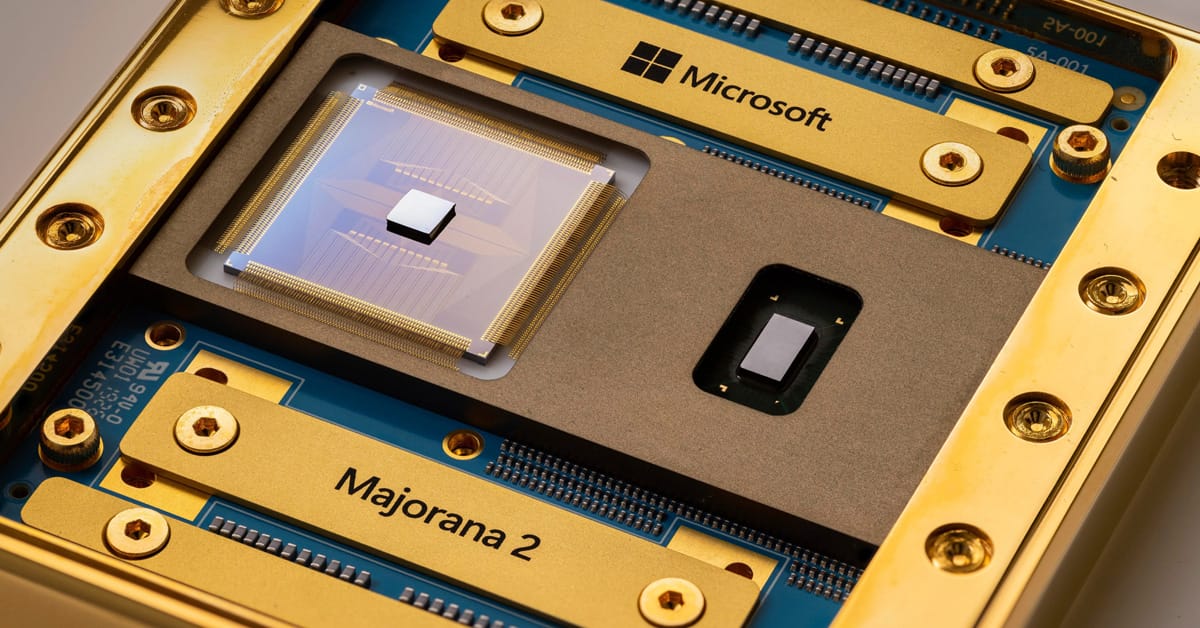
SAN FRANCISCO: Microsoft has announced Majorana 2, its latest quantum computing chip, with a promise to deliver commercially useful quantum machines by 2029.
CEO Satya Nadella revealed the chip at Microsoft Build 2026 on June 2. The chip is a follow-up to last year’s Majorana 1 and claims a 1,000-fold improvement in qubit reliability, a major step forward in quantum computing accuracy.
What makes Majorana 2 unique is how it was built. Microsoft designed the chip using its own AI platform called Microsoft Discovery, where AI agents were embedded directly into the development process. This approach reduced years of traditional research work down to just months.
Also read: CIA’s ‘Ghost Murmur’ Tech Sparks Debate After Dramatic Iran Rescue
Majorana 2 uses topological qubits based on a new state of matter Microsoft pioneered. The architecture protects quantum information through underlying physics rather than complex error correction. Qubit lifetimes now exceed 29 seconds, a dramatic improvement over earlier generations.
The chip currently runs on a four-qubit array foundation that scales over time. Microsoft designs the architecture toward million-qubit systems for commercially useful quantum computing. The roadmap targets practical quantum machines by 2029 across multiple industry applications.
The 2029 timeline matches IBM’s commitment from last month for its own quantum systems. IBM plans $10 billion in quantum spending and recently spun out a chip-making subsidiary. The Trump administration backs that spinout as part of broader US quantum policy.
Quantum computing promises breakthroughs in molecular simulation, materials design, and complex optimization problems. Energy, healthcare, and finance customers wait for the technology to reach commercial viability. Most applications remain theoretical until reliable, scalable hardware finally arrives.
Microsoft previously declined to commit to a specific year for commercial quantum machines. The Majorana 2 announcement formalizes a hard timeline against the company’s main competitors. The chip launches alongside Microsoft’s broader push into agentic AI hardware and platforms.

 Previous


