
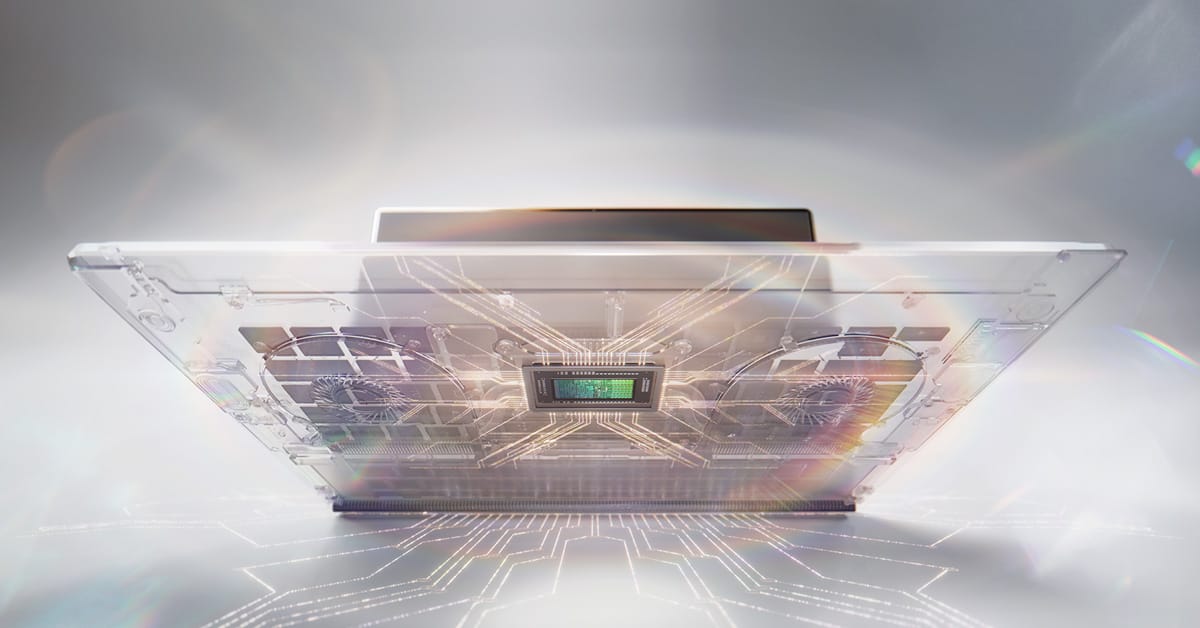
TAIPEI: Nvidia has unveiled its latest superchip, the RTX Spark, designed to bring personal AI capabilities directly to Windows computers. The chip is built to run AI models locally on a PC, without relying on cloud servers.
CEO Jensen Huang made the announcement at Computex 2026 on June 1 in Taipei, one of the world’s biggest technology events. The launch is being seen as Nvidia’s boldest and most ambitious move into the personal computer market to date.
Microsoft has also joined hands with Nvidia, working closely to optimize Windows specifically for the RTX Spark platform, making the experience smoother and more powerful for everyday users.
RTX Spark combines a Blackwell RTX GPU with 6,144 CUDA cores and fifth-generation Tensor Cores. A 20-core Nvidia Grace CPU connects through NVLink-C2C chip-to-chip interconnect. The system delivers up to one petaflop of AI compute with 128GB of unified memory.
Also read: Microsoft Takes on Apple With Its New AI-Powered Surface Laptop Ultra
MediaTek collaborates on the custom CPU design for power efficiency and connectivity. TSMC manufactures the chip using its advanced 3N process technology. The architecture brings data center capabilities into laptops and desktop machines directly.
“For forty years, you launched apps. With RTX Spark, you ask and the PC does the work,” says Jensen Huang.
Also read: AI Chips Are the New Oil and Everyone Is Running Low
The chip targets local AI agents running continuously inside a secure sandbox environment. Agents handle 3D modeling, architectural projects, and complex multistep tasks autonomously. The model runs frontier-scale AI workloads without sending data to the cloud.
RTX Spark ships in laptops and desktops from major manufacturers starting this autumn. Acer, ASUS, Dell, HP, Lenovo, and MSI build the first RTX Spark systems. A full DGX Spark workstation line extends the platform for developers and researchers.
The launch directly challenges Intel and AMD in traditional Windows machines globally. Qualcomm faces parallel pressure in Arm-based laptops alongside Apple’s tightly integrated platform. Nvidia bets that AI-native PC architectures fundamentally outpace incumbent designs across categories.
The first RTX Spark devices reach consumers later in 2026.

 Previous


