
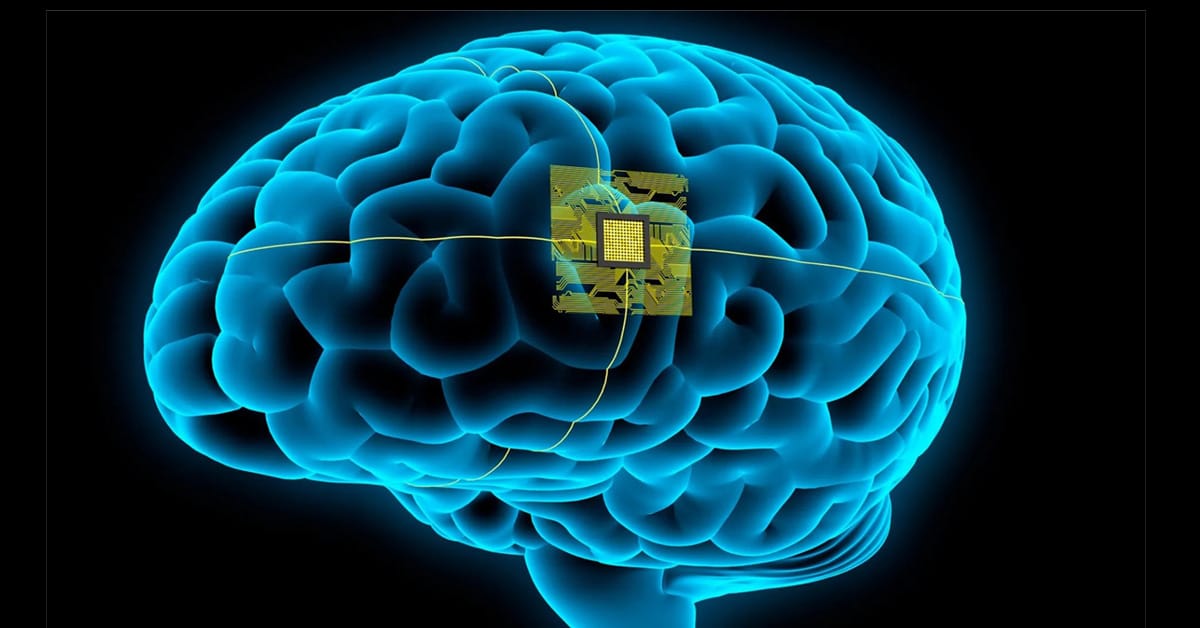
Beijing: A team of scientists in China has built a chip that can reconstruct the surface of a human brain in less than half a second, opening up new possibilities for treating neurological conditions and building smarter brain-machine interfaces.
Researchers from Peking University‘s School of Integrated Circuits and the Chinese Academy of Sciences detailed their work in the journal Science on July 3, drawing immediate attention for the chip’s remarkable speed claims against established GPU hardware.
Read more: Google Debuts TurboQuant to Reduce AI Memory Usage
The secret behind its performance lies in how the chip is designed. Unlike conventional processors that shuttle data back and forth between separate memory and processing units, this chip uses phase-change memristors that handle both jobs in the same place. Built on a 40-nanometre process, this approach cuts energy use significantly and removes one of the biggest bottlenecks in high-speed computing.
Read more: Nvidia RTX Spark Superchip Brings AI to Windows PCs
In testing, the chip outperformed Nvidia’s A100 GPU by 50 to 478 times on brain-surface reconstruction tasks. It also ran 3.5 to 36 times faster than other dedicated accelerators built for similar work.
Read more: Microsoft Takes on Apple With Its New AI-Powered Surface Laptop Ultra
Lead researcher Yang Yuchao, a professor at Peking University, said the chip could change how doctors approach complex neurological cases. “It can accurately reproduce brain folds for medical applications,” he said, adding that future uses could include neural navigation during surgery, early detection of Alzheimer’s disease and eventually personalised digital brain twins for individual patients.
It is worth noting that the speed comparison is specifically for brain modelling and not a general benchmark against Nvidia’s full capabilities. The A100 was also released in 2020, making it older hardware by today’s standards. This chip is built purely for neuroscience, not to compete in the broader GPU market.

 Previous


