
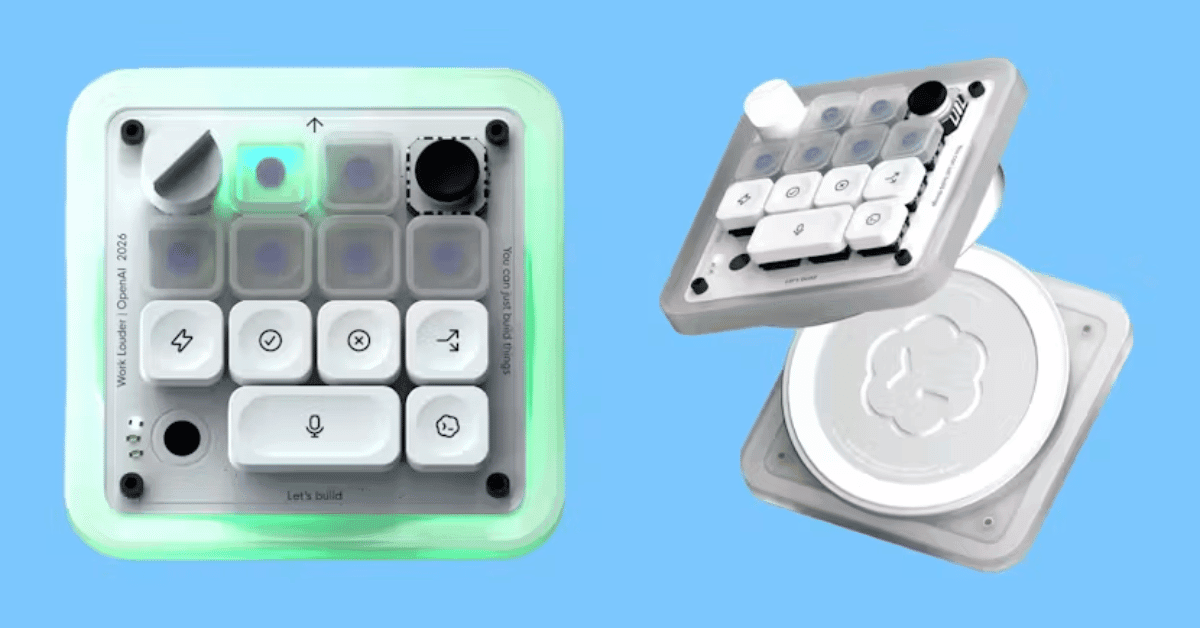
SAN FRANCISCO: OpenAI has launched Codex Micro, a physical control pad designed for developers working with AI coding agents. Priced at USD 230, the device sold out immediately after going live, highlighting growing interest in tools built specifically for AI-assisted programming.
The Codex Micro is a compact keyboard-like device, also known as macropad, created in partnership with keyboard maker Work Louder. It marks one of OpenAI’s first major moves into hardware, a company best known for software and AI models. The device is designed to help developers manage multiple Codex AI agents at the same time. Instead of contantly switching between windows on a computer screen, users can monitor and control AI agents through dedicated physical buttons.
One of the key features is a row of Agent Keys equipped with RGB lighting. These keys show the status of different AI agents in real time. Users can quickly see whether an agent is thinking, executing, waiting for input, or done, without opening a single conversation window. OpenAI says this can make things easier for developers handling large projects, especially when several AI agents are working on different tasks simultaneously.
Also read: OpenAI to Buy Python Toolmaker Astral to Strengthen Codex
The Codex Micro also includes a small joystick that can trigger common development workflows. Different movements can be assigned to tasks such as reviewing pull requests, debugging code, or refactoring software. Several dedicated command buttons are built into the device as well. These allow users to accept or reject AI suggestions, start conversations with agents, or activate push‑to‑talk features without using a mouse.
One of the most unusual features is a rotary dial that controls how much effort Codex puts into solving a problem. Turning the dial down can produce faster answers, while turning it up can make the AI spend more time reasoning through complex tasks. OpenAI describes this as a way to make AI interactions feel more direct and intuitive. Instead of changing settings through menus, users can adjust the AI’s behavior with a simple physical control.
The company has also focused on build quality. The Codex Micro features a CNC‑machined polycarbonate and aluminum body, mechanical switches, durable PBT keycaps, and replaceable keycaps with Codex branding. The device supports both Bluetooth and USB‑C connectivity and works with Windows and macOS systems.
The launch sheds light on a growing trend in the AI industry. As AI agents become more capable and take on larger workloads, companies are exploring ways to give users dedicated hardware for managing them.
Earlier this year, Anthropic introduced an open‑source project called Claude Desktop Buddy, which uses physical buttons to interact with AI agents. The emergence of both products suggests that AI companies increasingly see hardware as a useful companion to software.
For now, every Codex Micro unit has been sold through OpenAI’s online store. The company hasn’t yet revealed when new stock will become available.

 Previous


